Generative AI Ad Creative: How Ads Now Know Who You Are
Generative AI writes different ad copy for different people in real time. Here's how it works and what it means for brands and advertisers.
I still remember the afternoon I realized advertising had quietly learned to listen.
I was on a slow commute, half-watching Netflix and half-thinking about work, when two different blurbs stopped me. One read like a gunmetal thriller — fast cuts, betrayals, power plays. The other felt like a period drama — family ties, ambition, subtle choices with big consequences. Both described the same show. Neither was written for me by a person that afternoon.
That moment stuck. The Netflix I'd known for recommendations had quietly become a storyteller that knew what I liked — and used that knowledge to speak differently to me. That, I learned, is what generative ad creative does: it doesn't just pick an ad; it composes one on the fly, tuned to who's listening.
Why Generative Ad Creative Changes Everything
Old-school ads are like a play repeated every night. Generative ads are improv: same premise, infinite variations, each version written for the audience in the room. The system does three things well: reads the brand, understands intent, and composes a piece of creative that fits both.
This matters because generic messaging is dying. Users have trained themselves to ignore ads that feel mass-produced. The moment an ad speaks directly to something you care about — your genre preference, your price sensitivity, your current problem — the barrier drops.
A Little Newsroom in the Cloud
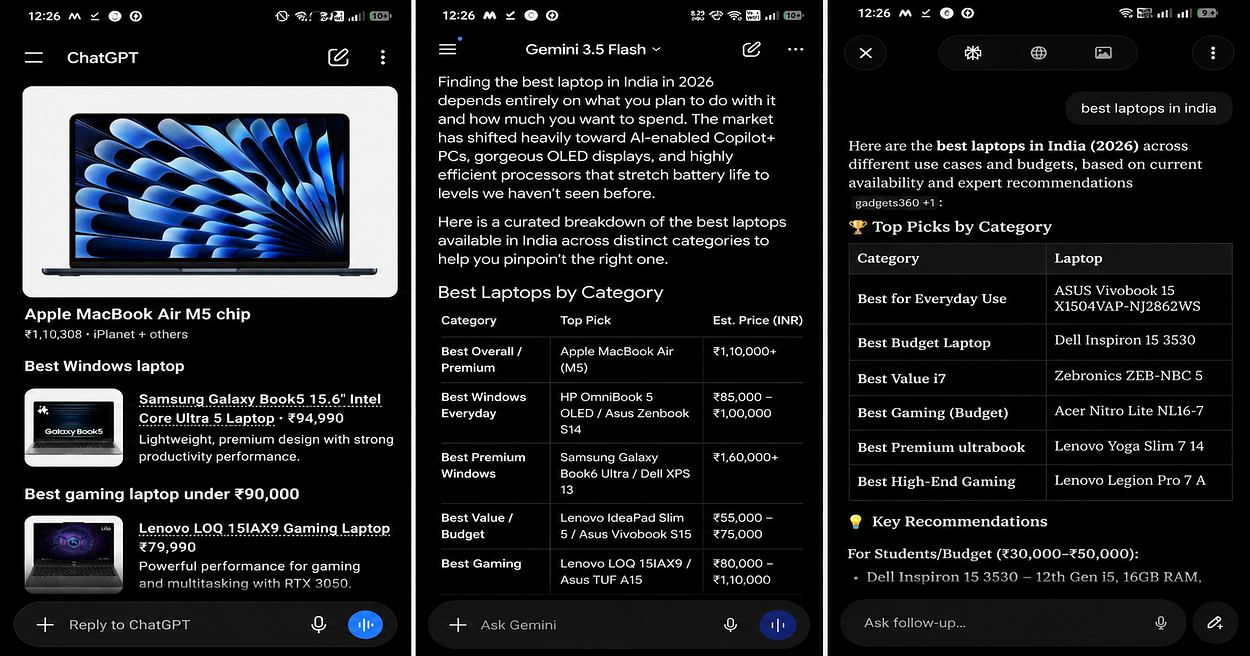
Think of a generative ad system as a tiny newsroom. First, it reads the brand — product pages, tone guides, reviews — building a single source of truth. Then, when someone asks something — "best lightweight laptop for remote work?" or "shows like Money Heist?" — the newsroom figures out intent. Finally, it writes: headline, short description, maybe a visual cue. It doesn't copy old lines; it crafts new ones that respect the brand.
The result is ad copy that feels like it was written for you. Because, in a sense, it was.
Rahul and Priya: A Small Example
Rahul watches crime thrillers. Priya watches period romances. Netflix launches The Gentlemen.
Rahul sees: "New on Netflix: The Gentlemen — A fast-paced crime drama of gangs, betrayals, and power struggles. If you loved Money Heist, this is for you."
Priya sees: "New on Netflix: The Gentlemen — Beyond the crime, this series explores family, ambition, and the choices that shape lives."
Same show. Different pitch. That's the twist: ad copy that knows preference and intent, turning interruption into a helpful suggestion.
Ads That Join the Conversation
Generative systems are also showing up inside conversational interfaces.
Imagine asking an assistant for hiking tips. You get layering advice followed by: "Sponsored: Brand X's lightweight trekking boots are built for extended hikes." It reads like a friend's tip, not a jingle. That's Conversational Discovery Ads — recommendations stitched into useful answers. Highlighted Answer Ads do something similar but clearly mark the sponsorship, which keeps things honest.
The Visual Lift
These systems do visuals too: region-specific imagery, lifestyle shots, dynamic banners. Give the model product photos and brand rules, and it produces contextual images — a snowy mountain for one audience, a sunlit cafe for another. Designers don't vanish. Their work scales from a single asset into many.
Where This Can Go Wrong
AI can be inventive — and that's not always good. One generated ad claimed a battery lasted "up to 72 hours" when the spec was 24. That came from mixing enthusiastic reviews into creative without grounding facts. The lesson: ground, verify, then publish.
Without guardrails, generative systems will optimize for engagement over accuracy. Brands that skip validation hooks are taking on real compliance and trust risk.
Footprynt in the Loop
At Footprynt, we're building exactly the kind of connective tissue this future needs: a clean brand knowledge layer, image transformation pipelines, and validation hooks so creative output stays truthful and on-brand. We help brands turn product data, images, and style rules into a single source of truth that generative models can safely rely on — so your personalized ads sound authentic and pass compliance checks before they reach a user.
How to Start Without Hurting the Brand
If you're testing generative ad creative, follow a simple recipe:
- Create a canonical brand knowledge base — specs, legal copy, voice guide
- Use retrieval so the model cites real facts, not hallucinated ones
- Add automated checks for accuracy, compliance, and tone
- Keep humans in the loop for sensitive categories
- A/B test and let the system learn from winners
How We Reached This Point
It didn't happen overnight. Advertising evolved in stages:
| Era | What Changed |
|---|---|
| Dynamic Search Ads | Search engines scraped landing pages to auto-generate headlines |
| Responsive Search Ads | Advertisers provided options; systems mixed and matched for top performance |
| AI-generated assets | Models produced headlines and images directly from website content |
| Gemini era (now) | Multimodal LLMs ingest brand rules and generate fully contextualized creatives on demand |
Each step reduced manual friction and increased personalization. The Netflix blurbs I saw are the latest chapter in that arc.
The Future I'm Betting On
Ads won't disappear. They'll become smarter companions — suggestions inside stories and answers tailored to the moment. Conversations will blend text, image, and audio. Creatives will adapt in real time as people interact.
Back on that train, I closed the app with a small grin. The Gentlemen's blurb hadn't interrupted me; it spoke to something I already cared about. Once, advertisers shouted to be heard. Now the better move is to listen — and then say exactly what matters.
Want to build intent-driven campaigns that actually fit your audience? Footprynt turns creator content into multi-channel performance campaigns — grounded in real audience signals, not guesswork.
Tags
Ready to Scale Your Influencer Marketing?
Join 1,000+ brands using FootPrynt's AI platform for influencer discovery, outreach, and attribution.
Start Free Trial →