Instagram Feed Changed in Minutes: How AI Native Advertising Works
AI personalization changed an entire Instagram feed in minutes. Here's the exact mechanics behind native advertising and what it means for brands.
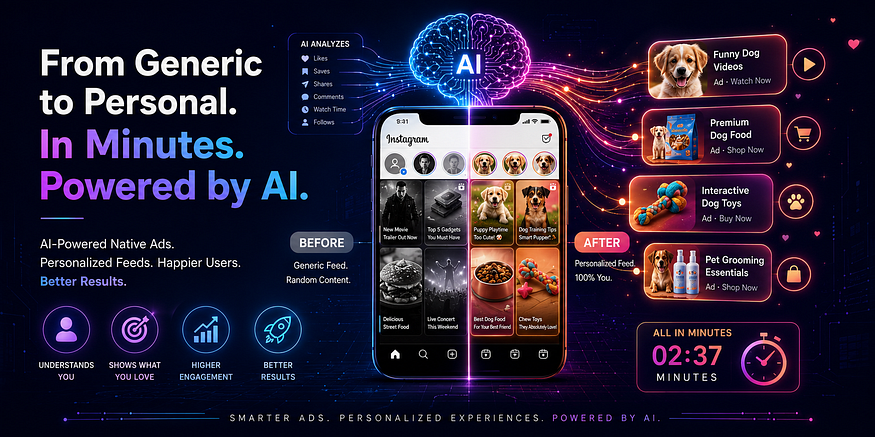
I opened Instagram. My Explore page looked normal: movies, gadgets, entertainment, food, random viral videos. Then I did something simple — I watched dog reels, liked dog posts, stuck with dog content for a few minutes.
Minutes later, my entire Explore page transformed. It was now 90 percent dog content: dog videos, pet products, dog toys, pet care ads, dog adoption posts.
Same app. Different feed. Because Instagram's AI learned in minutes: you love dogs. That's the power of AI-driven native advertising — and it's reshaping how brands reach people.
Why Native Advertising Is Winning
Banner ads are dead. Generic ads are dead. Interest-based targeting from 2015 is dead. Static creatives that everyone sees the same way are dead.
What's alive?
- AI predicting your interests in minutes
- Dynamic ads that generate different headlines for different people
- Native content that blends seamlessly into your feed
- Creator content fueling personalized campaigns
The Instagram feed example proves it: interacting with dog content for a few minutes transformed the entire page. AI learned preferences instantly and personalized both content and ads.
What Native Advertising Actually Is
Native advertising is paid media designed to look exactly like the platform where it appears.
Unlike banner ads that interrupt, native ads blend in. They look like:
- Sponsored articles on news sites
- Recommended products in shopping apps
- Promoted posts in social feeds
- Sponsored content in AI responses
- In-feed ads on content platforms
The goal is not to interrupt. It's to enhance your experience with relevant content.
Key insight: When native ads work, users don't notice them — and that's exactly the point.
How AI Actually Works Behind Your Instagram Feed
Here's the exact breakdown of what happened during my dog experiment:
- I watched dog reels for a few minutes
- AI recorded every engagement signal
- Interest category locked as Pets/Dogs
- Recommendation system updated my profile instantly
- Similar dog content got promoted to my feed
- Pet-related ads became eligible to display
This is the foundation of AI-driven personalization in native advertising.
The Timeline: From Generic Spam to Hyper-Personalized Ads
| Era | Timeframe | What Changed |
|---|---|---|
| Generic Advertising | 2007–2012 | Everyone saw the same banner ads. Zero personalization |
| Behavioral Targeting | 2013–2017 | Instagram, Facebook, Google started tracking likes, shares, watch time |
| Machine Learning | 2018–2022 | AI analyzed thousands of signals. Native ads crushed banners |
| Generative AI | 2023–Now | AI predicts interests in minutes. Different people see different headlines and images |
Modular Creative Assets: Why You See Different Ads for the Same Product
One massive innovation driving this shift: modular creative assets.
Instead of one static ad, advertisers provide reusable pieces:
- Headlines: "Discover Premium Hiking Gear" or "Upgrade Your Home Security Today"
- Images: product photos, lifestyle shots, brand visuals
- Descriptions: benefits and promotions
- CTAs: "Learn More", "Shop Now", "Start Free Trial"
AI dynamically assembles these into customized ads based on what it knows about you. So the same product shows different ads to different people.
Context Is King
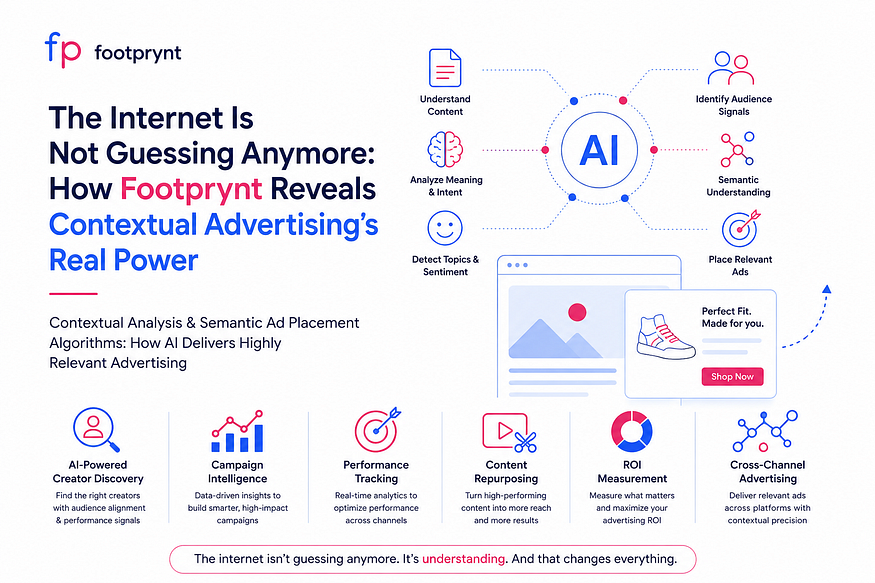
Context is the strongest signal for ad relevance. AI analyzes everything around an ad:
- Content topics: Technology, Travel, Finance, Health
- Semantic meaning: AI understands what content is truly about, not just keywords
- Sentiment: positive, neutral, or negative (brands prefer positive environments)
- Brand safety: AI checks for violence, misinformation, hate speech, explicit material
This ensures ads appear in appropriate places — protecting both the user experience and the brand.
AI-Driven Retargeting Gets Smarter
Traditional retargeting spams you with the same ad forever. AI-driven retargeting creates personalized variations.
Example: You viewed a laptop but didn't buy.
The system shows:
- Version A focusing on battery life
- Version B highlighting performance
- Version C promoting a limited discount
Machine learning picks which version drives conversion.
Challenges We Can't Ignore
| Challenge | Why It Matters |
|---|---|
| Privacy concerns | Advertisers must handle data responsibly |
| Transparency | Users should know when content is sponsored |
| Algorithmic bias | Models might favour certain audiences unfairly |
| Creative oversaturation | Too much personalization feels intrusive |
Balancing relevance with comfort is critical. The best native ads feel helpful, not surveilled.
Where Footprynt Fits
At Footprynt, we built for exactly this shift. In an AI-personalized world, Footprynt turns creator content into full-funnel campaigns:
- Creator content becomes performance ads on Meta, Google, and retargeting
- Creator posts become paid promotion ads (boosted)
- Creator stories become CTV and OTT campaigns
- Influencer activity and Shopify data become unified ROI
As platforms use AI for hyper-personalization, brands running creator-led campaigns on Footprynt reach relevant users without blasting generic ads, cut manual campaign overhead, and improve relevance and conversions.
Ads are dead. Intent-personalized native experiences are the new currency. Footprynt helps Indian brands compete in this new game.
Tags
Ready to Scale Your Influencer Marketing?
Join 1,000+ brands using FootPrynt's AI platform for influencer discovery, outreach, and attribution.
Start Free Trial →